“Detroit Digital – On Tourists in the Apocalypse”
Article by Marcel O´Gorman, on the abandoned city of Detroit and its reflections on the internet, published on CTheory. www.ctheory.net/articles.aspx?id=586#_ednref9
“We shall solve the city problem by leaving the city.”
Henry Ford
The physical abandonment of the city is evident, even the dead won´t stay. At least 500 graves are moved from the centre to the suburbs each year. At the same time, the area becomes a freehaven for new music scenes and youth culture, a stage for DJ´s like Plastikman and DJ Spooky. As the body of the city decays, its digitized version is growing fast. Bit by bit, traditional grafitti is replaced by virtual tagging. The question is raised wether bloggers can save Detroit:
“Detroit-oriented blogs fail to demonstrate a democratic move toward taking care of the “city problem.” For every well-intentioned, well-researched blog about Detroit’s trials and tribulations (e.g., http://detroitblog.org), there are a dozen urbex blogs that portray Detroit as the set of Blade Runner (e.g., http://fuckingblahhdetroit.endlessapathy.net). What could potentially be a community of individuals working collaboratively to give a city a voice and restore its vitality, is overrun by a network of isolated, narcissistic individuals shouting, “Look at me! Look at this dangerous place I visited! Make me your hero!”
O projeto de revitalização da “cracolândia”, no centro de São Paulo, está saindo do papel e já está tendo seus primeiros efeitos polêmicos. Ações com 400 policiais da PM e polícia civíl conseguiram expulsar a maioria dos traficantes e usuários do perimetro do projeto. Na ação um número de usuários de crack foi encaminhado para hospitais. Até óntem 24 pessoas foram presas, não foi divulgado se eram traficantes.
A venda e uso das drogas continua nas regiões vizinhas, como República, Santa Cecília e Vila Buarque. Este efeito colateral da operação urbana já havia sido previsto por vários profissionais e organizações no centro da cidade. Mesmo assim, o projeto da prefeitura não incluiu estratégias para resolver esta questão.
Parece que foi comprovada a tese que é possível expulsar o tráfico de drogas de uma região da cidade a força. Certamente, quem tiver um imóvel nas 23 quadras entre as avenidas Rio Branco, Duque de Caxias, Mauá, Cásper Líbero, Praça Alfredo Issa e Avenida Ipiranga, vai se livrar do tráfico, moradores de rua e do IPTU por um bom tempo. Nas regiões vizinhas desse polígono o IPTU sobe e o número de moradores de rua e problemas relacionados ao tráfico crescem. É uma inversão bem interessante. Pelo jeito é ótimo participar da operação, se não, então é melhor ficar longe dela.
Uma reportagem flagrou na semana passada venda de crack em um novo local, batizado de Nova Cracolândia. Fica na rua dos Gusmões, esquina com a avenida Barão de Limeira. É verdade que a mídia tende a apimentar as notícias, mas os acontecimentos estão ali para todo mundo ver com os próprios olhos. Outras reportagens e observações de moradores dos bairros identificaram situações similares na Vila Buarque e na Avenida São João, entre outros.
Hungry inhabitants of Gaza invading the nomansland leading to Egypt, where they intend to do some shopping. In the process they leave the Israeli barriers look like a Richard Serra sculpture.
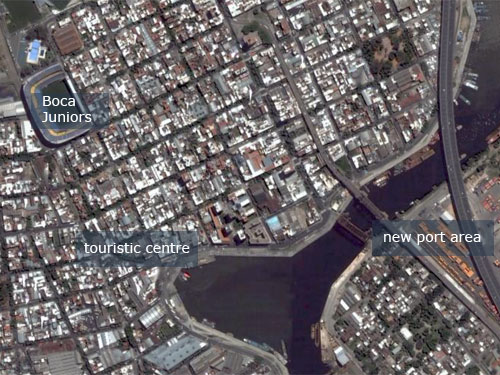
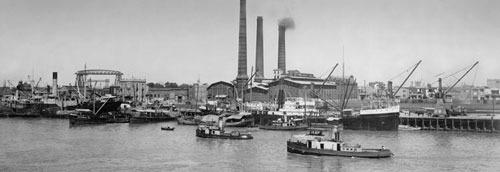
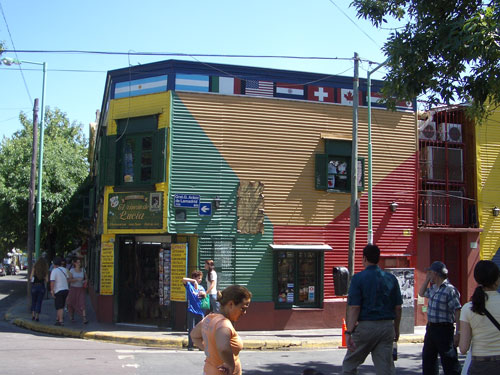
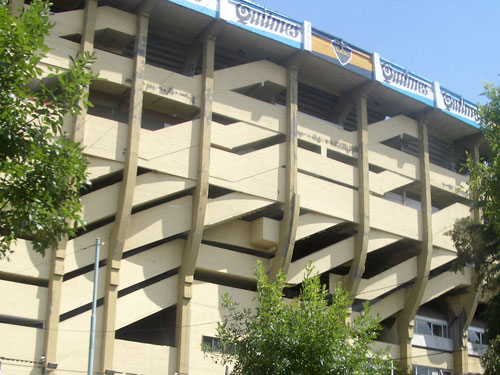
La Boca, district near the port of Buenos Aires, originated as a traditional worker class barrio of Italian immigrants at the end of the 19th century. Today the “caminito” between the Boca Juniors stadium and the old docks, loaded with souvenir stands and tango shows, attracts thousands of tourists. The old houses in these streets, made of steel cladding, are colorfully painted and house only souvenir shops and restaurants on the ground floor.
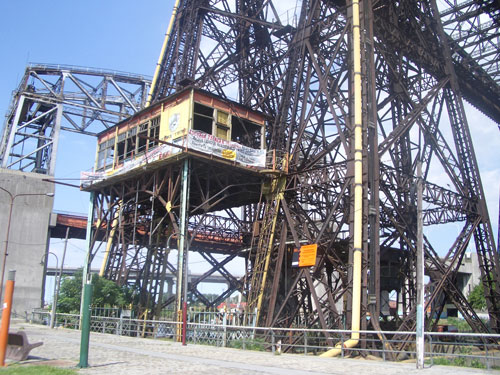
Tourists are dropped in masses by organized bus tours, and warned not to wander around the neighborhood, especially the open wasteland behind the stadium with the slums and the area underneath the flyovers, because they could get mugged. There is indeed a bizarre contrast between the small colorful centre and the rest of the former dock worker´s neighborhood in the middle of post-industrial remains.
Does this kind of revitalization, with its thematic scenery and dollars from the tourist industry, help to preserve the culture of the Italian immigrants in Buenos Aires and the local industrial heritage?
Does it reduce the social differences and segregation within La Boca and Buenos Aires as a whole?
And finally, what does it say about the role of architectural heritage in all this?
Investments are made to maintain and transform shantytown-like cabins, favorites of the public, wearing colors they never possessed. At the same time industrial sheds and infrastructure, highly appreciated by the academic world, are rusting away a hundred meters ahead. Perhaps we should alter our standards regarding the value of these structures and their meaning, or try to discover why the “valuable” is not being economically viable at this moment.
Article on industrial heritage in Argentina www.vitruvius.com.br/arquitextos/arq091/arq091_03.asp
General info on La boca http://en.wikipedia.org/wiki/La_Boca